
A two-wheel device that works in harsh conditions.
Motorcycles make power, communication and sensor stability harder than cars: smaller batteries, tight space, rain and humidity, road shock and vibration. The BCM device is designed for all of it.
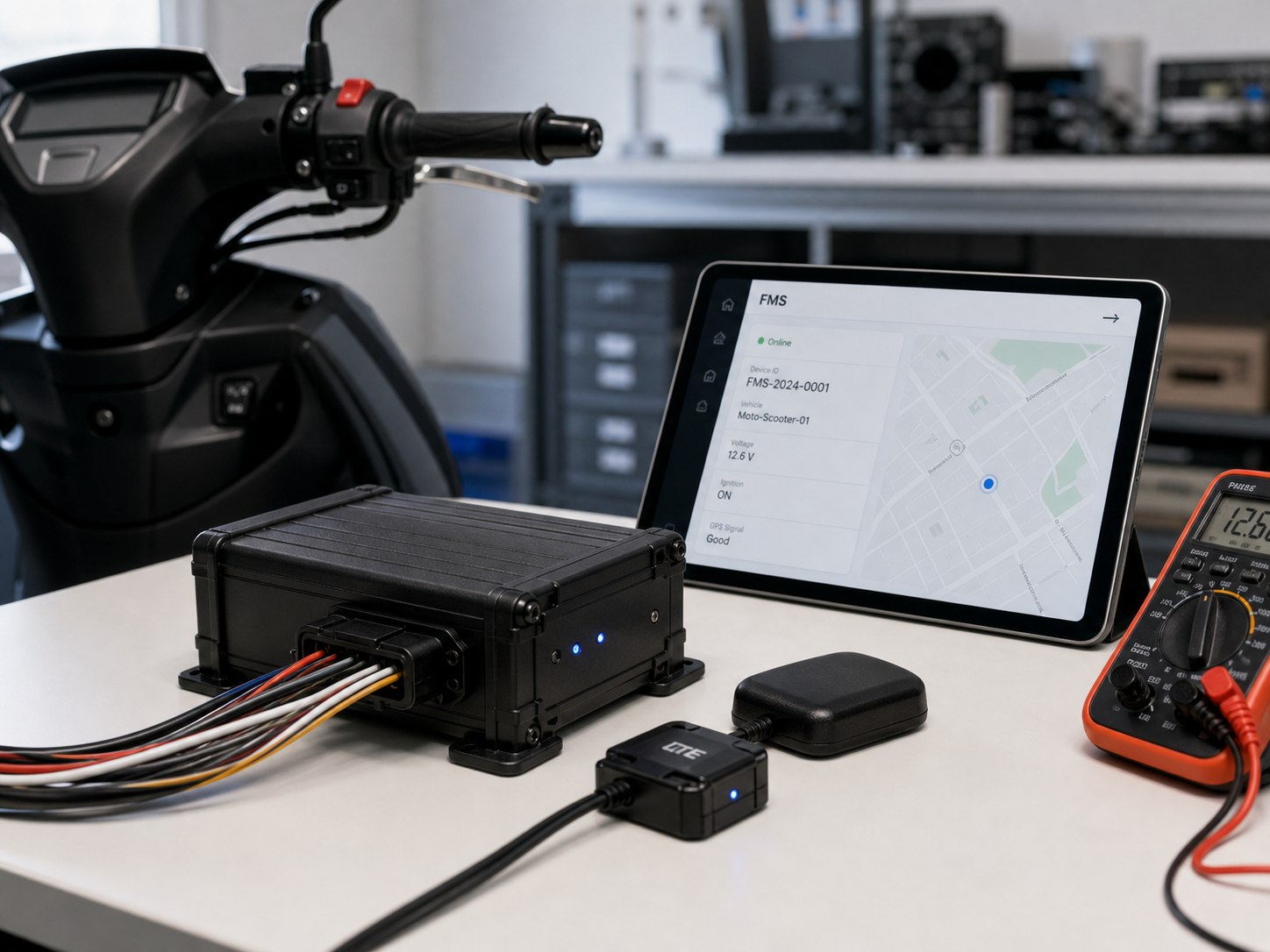
Two-wheel-specialized hardware designed for water/dust, vibration and power stability.
Performance targets (per the TIPS project)
| Metric | Best in class | Korea before R&D | BCM target |
|---|---|---|---|
| Dust/water resistance (IP) | IP67 (GoPro) | IP54–IP65 | IP65+ (stable under car-wash, heavy rain, road spray) |
| Vibration resistance | PASS (KOTSA automotive standard 4.2.3) | None (no two-wheel standard) | PASS |
| Transient-voltage resistance | PASS (automotive standard 4.2.6) | None | PASS |
Integrated capabilities
-
Monitoring (location control)
Per-second GPS tracking · ignition on/off · real-time battery status.
-
Remote control (restart prevention)
Keeps the current ignition on but blocks the next start — recovering assets while ensuring rider safety.
-
Key-sharing
Smartphone-based access control without a physical key. Ideal when multiple riders share one vehicle.
Manufacturing & certification roadmap
- H2 2025Hardware optimization; data transmit/receive pipeline built
- Jan–Jun 2026Prototype and communication-stability testing; 100+ units fitted on operating vehicles
- Jul–Dec 2026Mass-production tooling · radio certification obtained
- 2027Vietnam prototype contract complete · 3,000-unit India/SE-Asia export target
Contract manufacturing — Kiwi
PCB fabrication · SMT · hardware assembly · testing, with two-wheel FMS contract-manufacturing experience. Mar–Oct 2026.
Technology escrow (filed 2026-04-01)
Device schematics, artwork and AI-model implementation methodology placed in escrow with KIBO.